
The Kimnori “Gimjaban” Difference
Seasoned Seaweed Flakes, traditionally known in Korea as Gimjaban, are a savory side dish created by finely crushing roasted seaweed and stir-frying it with a blend of sugar, salt, sesame or perilla oil, and roasted sesame seeds. While the name “jaban” refers to a dish specifically designed to complement rice, not all flakes deliver the same level of satisfaction.
Most generic flakes are overly oily or lose their crunch quickly, but Kimnori’s Seasoned Seaweed Flakes are elevated by Chef Imokase’s Signature Roasting Technique. This master-chef refined process ensures a deep, savory crispness that doesn’t feel greasy, creating the ultimate “bapdodŭk” (rice thief)—a snack so delicious it makes you crave more rice.
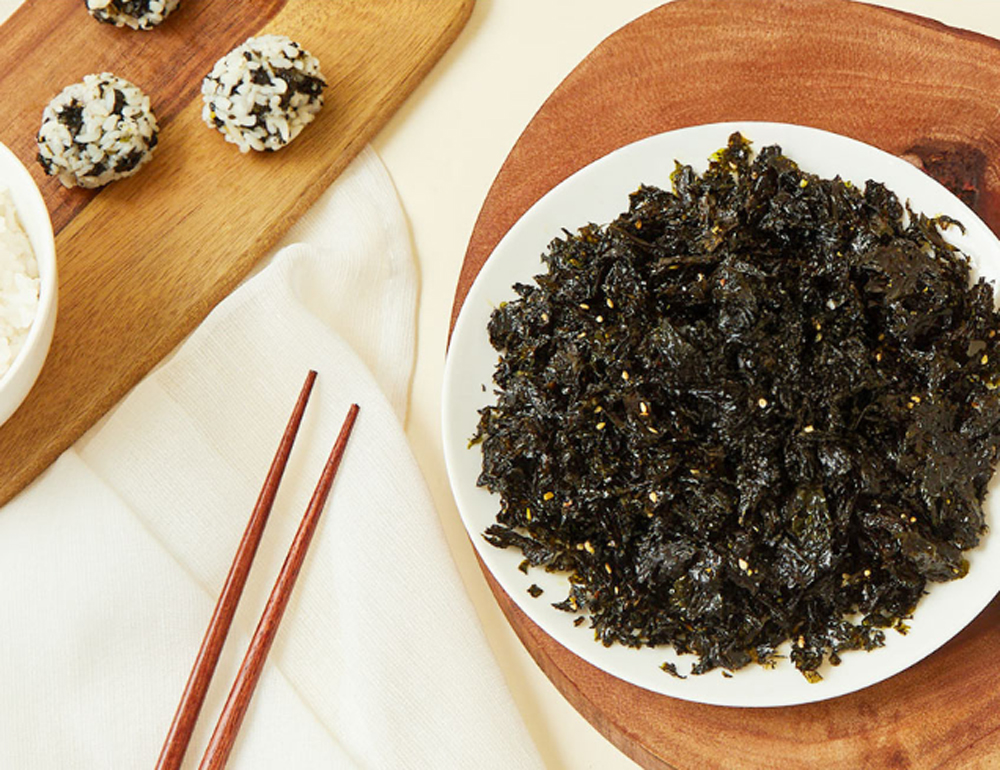
History of Seasoned Seaweed Flakes (Gimjaban)
The earliest mention of gimjaban appears in Siui Jeonseo (circa 1800), a traditional Korean cookbook. It describes a method of layering multiple sheets of seaweed, seasoning them, drying them, and then slicing them for consumption.
- Expansion of the “Jaban” Category: The term “jaban” does not simply refer to salty foods. It broadly denotes side dishes that are seasoned, stir-fried, or preserved for serving alongside rice. Gimjaban falls under this category and has developed into one of Korea’s most beloved savory and mildly salty side dishes.
- Appearance in Modern Cookbooks: Gimjaban was also featured in the 1924 culinary text Joseon Mussang Sinsik Yori Jebeop (The New Cooking Methods of Joseon), which helped popularize its preparation method across the country.
- Today: Gimjaban remains a popular Korean side dish enjoyed with rice. In recent years, it has been commercially produced in a wide variety of flavors and textures, making it easily accessible and loved by people of all ages.
Additional Information
- Ingredients: Seaweed is stir-fried with oil, salt, sugar, and sesame seeds to create its signature savory-sweet flavor.
- Varieties: Gimjaban can also be made using softened or aged seaweed, resulting in a chewier texture in some versions.
- Characteristics: Known for its crispy texture and balanced salty-sweet flavor, gimjaban is both simple and deeply satisfying—a perfect complement to any meal.
How to make a rice ball with seaweed flakes?
Preparation items:
Bowl of rice
Tuna Fish (a can of tuna)
Mayonnaise, Sesame oil, Salt
- Mix Mayonnaise with Tuna fish
- Put some salt in the rice
- Put a little bit of Sesame oil
- Mix them
- Make a round shape in the rice ball
- Then, close the round shape
- Mix the rice ball with the seaweed flakes
Leave a Reply