
Unlocking the Secret to Gourmet Umani Desserts
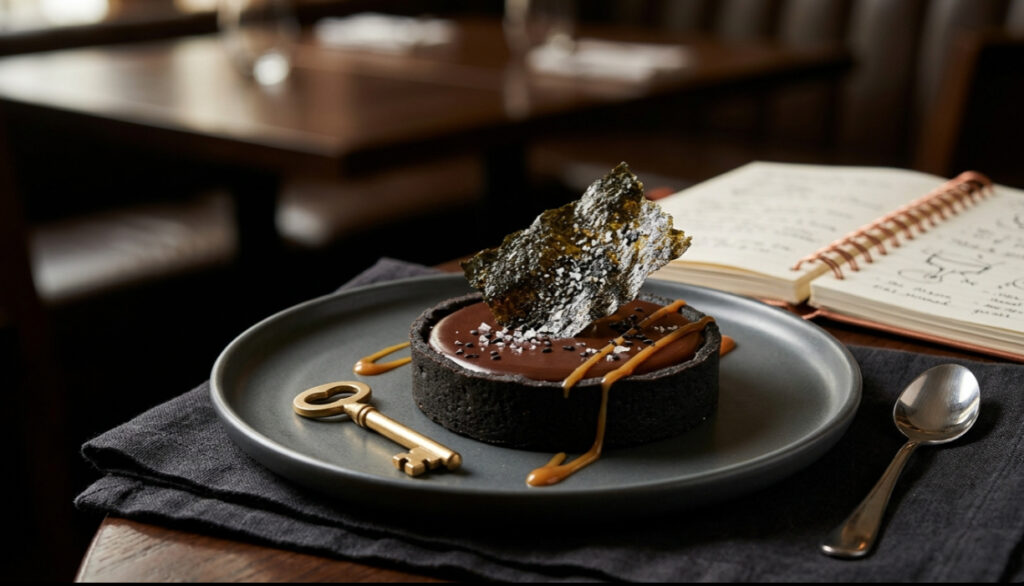
For centuries, seaweed has been prized in savory traditions—anchoring broths, wrapping rice, and lending depth to umami-rich dishes across East Asia. Yet its role has largely stopped at the edge of the dessert plate. Our culinary experiment asks a provocative question: What happens when seaweed crosses that boundary? The answer, it turns out, is not novelty—but sophistication.
Rethinking Umami in the Sweet Realm
Desserts are often framed by a familiar triangle: sugar, fat, and acidity. Umami, despite being the fifth basic taste, is rarely invited to the table. Seaweed challenges this limitation. Rich in glutamates, minerals, and subtle marine aromatics, it introduces depth rather than sweetness—creating desserts that feel layered, grown-up, and quietly indulgent.
Rather than overpowering a dish, seaweed acts as a supporting note, much like salt in caramel or miso in chocolate. Its role is not to announce itself, but to round edges, amplify flavor, and leave a lingering complexity that surprises the palate.
Exploring Seaweed Profiles for Pastry
Not all seaweed behaves the same, and successful dessert applications depend on understanding their individual personalities:
- Kombu, when gently infused, reveals a naturally sweet, almost vanilla-like undertone. It pairs beautifully with dairy-based desserts—think kombu-infused panna cotta, custards, or ice creams where it enhances creaminess without tasting overtly “marine.”
- Nori, often dismissed as too briny, becomes transformative when toasted and finely milled. Incorporated into chocolate, shortbread, or caramel, it delivers a savory contrast that deepens cocoa notes and balances sweetness.
- Green laver and sea lettuce offer grassy, mineral-forward flavors that shine in fruit-forward desserts, citrus gels, or even sugar-dusted crisps used as garnishes for plated pastries.
The key lies in restraint. Seaweed is not the headline act—it’s the quiet complexity that elevates the whole composition.
Technique Matters More Than Shock Value
This experiment is not about shock-factor desserts or gimmicks. Precision is everything. Infusions must be controlled, extractions clean, and textures refined. Oversteeping kombu or overusing powdered seaweed can quickly tip a dessert from elegant to aggressive.
High-endsimplicity.
More importantly, they reveal seaweed’s true versatility. No longer confined to snacks or sushi, it emerges as a sophisticated ingredient capable of reshaping the dessert landscape.
The Future of Sweet Umami
As chefs and pastry artists continue to blur the lines between savory and sweet, seaweed offers a powerful, sustainable, and culturally rich tool. This culinary experiment is just the beginning—an invitation to rethink ingredients we thought we already understood.
In the hands of thoughtful creators, seaweed doesn’t just belong on the plate.
It belongs at the end of the meal.
Leave a Reply